
New: Indigenous AI Advisory Circle
Plus robotics assisted carving decolonizing health care, and Māori data sovereignty.
Boozhoo News River Readers,
This week we’re sharing a feature on the newly formed Indigenous AI Advisory Circle from Quebec Artificial Intelligence Institute and the Canadian Institute for Advanced Research - with our own Jeff Ward as a member! There’s also a story about Māori data sovereignty and self determination, another on how robotics are making master carving techniques more accessible, and updates from our friends at Indigenous Tech Circle.
Thanks for the time you spend reading our News River - if you’ve got news or a story you’d like to contribute, you can always hit reply and send us the link!
This week’s stories include:
Māori-owned data storage network hailed as significant step towards data sovereignty
Preserving Kwakwaka'wakw carving traditions through robotics and applied learning
Mila and CIFAR Launch the Indigenous AI Advisory Circle
The big picture: Quebec Artificial Intelligence Institute and the Canadian Institute for Advanced Research (CIFAR) are proud to announce the creation of the Indigenous AI Advisory Circle, a new advisory body dedicated to ensuring Indigenous voices, values and priorities are embedded in Canada's AI ecosystem at every level.
Why it matters: The Circle will provide culturally grounded, community-connected guidance to support the expansion of Indigenous participation in AI, including research, training, education, and broader community engagement.
Highlights:
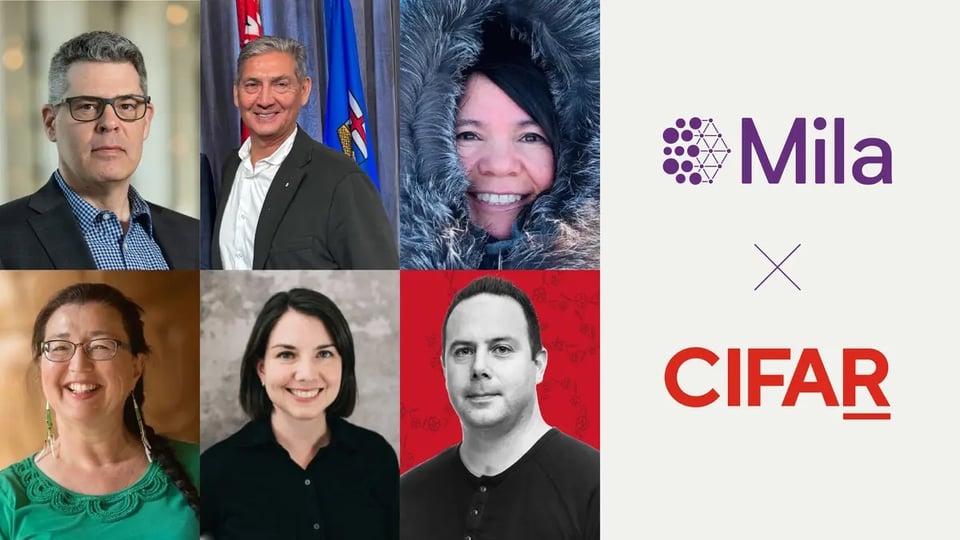
The Indigenous AI Advisory Circle brings together six distinguished Indigenous leaders whose expertise spans data sovereignty, technology, language revitalization, governance and community development.
Top row: Dr. Jonathan Dewar is the Chief Executive Officer of the First Nations Information Governance Centre (FNIGC), George Lafond currently advises the Saskatchewan Indian Institute of Technology, and Dr. Natasha Ita MacDonald is an Inuk from Nunavik and a consultant specializing in Inuit-led decolonization and Inuktut language preservation.
Bottom row: Caroline Running Wolf, born Old Coyote (Crow), is a language activist and XR producer dedicated to supporting Indigenous languages and data sovereignty, Natiea Vinson is the CEO of the First Nations Technology Council, and Jeff Ward is the founder and CEO of Animikii Indigenous Technology, a values-driven B Corp building ethical technology for a more equitable world.
What they’re saying: ''The Indigenous AI Advisory Circle represents a meaningful step toward building an AI ecosystem that is genuinely reflective of communities across Canada. We are committed to ensuring that Indigenous voices are not a footnote but a foundation of how we develop, deploy and govern AI,'' said Lynnsey Chartrand, Head of Indigenous Initiatives at Mila and Citizen of the Manitoba Métis Federation.
Learn more: Read the full article here.
Curated Articles:
Indigenous Perspectives on AI: Appropriation, Regulation, and Innovation
The Annual Innovation and Technology Law Conference convenes leading voices at the intersection of law, technology, and justice to explore one of the most urgent questions of our time: how artificial intelligence is reshaping relationships with knowledge, governance, and community. This year’s theme, Indigenous Perspectives on AI: Appropriation, Regulation, and Innovation, centers Indigenous expertise and leadership in conversations that are too often dominated by external frameworks. Across a full day of virtual programming, the conference examines how AI systems intersect with cultural heritage, data sovereignty, environmental stewardship, and legal authority.
Māori-owned data storage network hailed as significant step towards data sovereignty
A new decentralised data storage network will put Māori data in Māori hands with the goal of ensuring Māori sovereignty doesn't "stop at the server door". Designed by Te Kāhui Raraunga, Te Pā Tūwatawata will be available to marae, hapū, iwi or other organisations who wish to store their data within the protection of the Pā. Principal advisor Erena Mikaere said it was a commercial storage service designed specifically to meet the needs of iwi Māori, hapū and marae. The project was built on open source technology and led by Māori scientists, Māori engineers and grounded in tikanga Māori, she said. "For us and all indigenous peoples really globally, sovereign digital systems aren't and shouldn't be a technical preference. They are a precondition for self-determination, for rangatiratanga."
Sociology professor Theresa Rocha Beardall was selected for the William T. Grant Scholars Program class of 2031. The program awards $425,000 over five years for Rocha Beardall and her research team’s development of digital archival organization models for the Puyallup Tribe. As a part of Puyallup’s Tribal Historic Preservation Department’s (THPD) Family Data Reclamation Project, scheduled to officially begin fall 2026, Rocha Beardall’s team will digitize at least 68,000 documents from regional, state, and federal data repositories. The project will focus on records of the Puyallup Tribe’s experiences with Washington state’s boarding schools, which forcibly removed Indigenous children from their families throughout the 19th and 20th centuries. The second portion of the project will organize the data into a searchable archive. Rocha Beardall added she sees the award from the William T. Grant Foundation as a signal to other researchers to decenter themselves and focus on keeping decision-making power with the stakeholders of their research. “If the most prestigious academic educational award will fund work that does this at the front end, maybe other people should be doing it too.”
Preserving Kwakwaka'wakw carving traditions through robotics and applied learning
Researchers from Camosun College and the University of Victoria have been awarded a grant to support the preservation of Northwest Coast Indigenous carving traditions through an adaptive robotic system that collaborates with master carvers. Carey Newman (University of Victoria), Richard Gale (Camosun College), and Keivan Ahmadi (University of Victoria) received funding from the New Frontiers in Research Fund Exploration Stream, a program designed to support high-risk, high-reward interdisciplinary research that goes beyond disciplinary boundaries. “Traditionally, carving has been passed down through hands-on mentorship, often within families or communities, but current challenges, including climate change, limited access to old growth, urbanization, and legacies of colonialism, such as displacement from land and loss of language, make the continuation of this cultural practice more important than ever” says Carey Newman, Impact Chair for Indigenous Art Practice and primary investigator for the grant. “This project creates new opportunities to connect with and engage young people to learn through innovative digital collaboration tools that will preserve and strengthen carving knowledge.”
When an Indigenous woman gives birth at a Canadian hospital, saving the placenta is treated as a given. Multiple family members crowd the birthing room. A quiet space is made available. These aren't special accommodations, they're how care is supposed to work. That example, drawn from one of 15 studies reviewed in new research from The George Institute for Global Health's Guunu-maana (Heal) team, illustrates what decolonizing health care looks like in practice. Not a policy slogan. Not a training module. A fundamental reshaping of who holds power in a medical encounter. The systematic review, published in the International Journal for Equity in Health, is believed to be the first to examine the practical elements of health care decolonization across global settings. Researchers analyzed studies from Canada, Australia, Aotearoa New Zealand, the United States, Chile and South Africa, drawing on qualitative data from 835 participants.
Indigenous Tech Circle - New platform overview
Join Circle host Nicole Oke, who will cover Tech Circle's 2026 goals and focus areas, walk through the upgraded member experience, highlight new platform features, tools, and opportunities, explain how members can connect with the broader Indigenous tech ecosystem across Canada, and outline upcoming programs, events, and member benefits. Date: June 16 online. PS. Know an Indigenous founder? Indigenous Venture Challenge applications close July 1! Find those details here.

Add a comment: