
From wildfires to clam gardens: decolonizing data
How Indigenous expertise is enriching cultural preservation.
Boozhoo News River Readers,
This week we’re sharing stories about protecting cultural heritage sites from wildfire damage, Indigenous perspectives enriching the interpretation of survey data, and how a virtual museum is preserving Igloolik culture - in three languages.
This week’s stories include:
Braiding knowledge: how Indigenous expertise and western science are converging
Indigenous pathways to STEM: Successes, barriers, and next steps across Turtle Island
As data becomes a strategic asset, Native leaders face a new sovereignty test
Before wildfire season begins again, Indigenous fire keepers gather to share knowledge
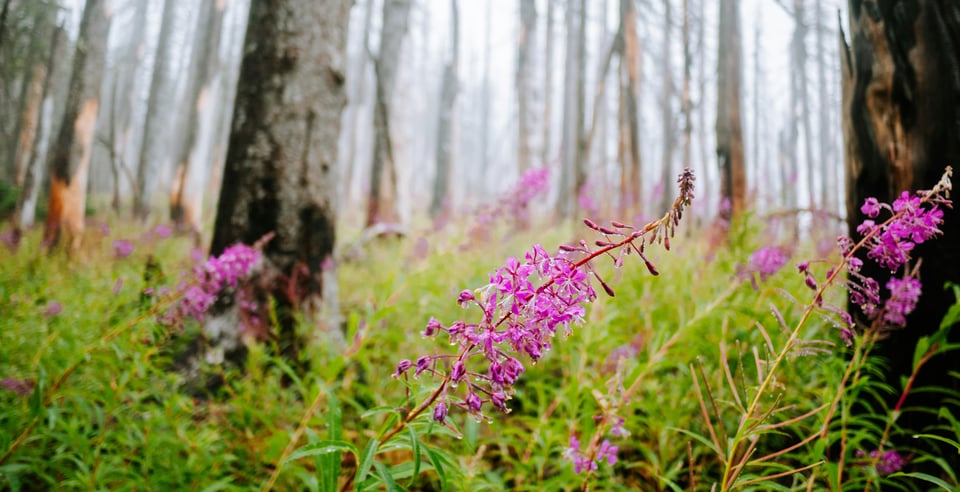
The big picture: In March, attendees of Salish Fire Keepers Society event in T k’emlúps learned about working with blazes to protect the land, decolonizing fire management and more. In 2022, one year after wildfire tore through the Village of Lytton, a blaze broke out at the nearby Stein Valley Nlaka’pamux Heritage Provincial Park. The site, co-managed by Lytton First Nation and the “B.C.” government, contains pictographs, petroglyphs and culturally modified trees, along with more important cultural sites.
Why it matters: Sheresa Brown, a 31-year-old Lytton First Nation member who works as a field technician and archaeology monitor with the Nlaka’pamux Nation Tribal Council. When fires happen near registered archaeological sites, Brown works with BC Wildfire Service crews and structural protection specialists to safeguard cultural heritage. “I was all for it,” Brown says. “But I wanted to do it in the right way.”
Key points:
To avoid the pictographs washing away from firefighting efforts, Brown outlined a 75 to 100 metre buffer zone around the cultural site. Sprinklers were set up around the buffer zone, and… stopped the flames from reaching the pictographs. In other wildfires, she has helped to determine which registered archaeological sites are within a fire’s boundaries and are along its projected path, directing crews where to work.
Brown was one of more than a dozen experts and technicians drawn from the realm of Indigenous fire stewardship — from researchers to Indigenous land managers and fire practitioners — who gave panel talks at the Salish Fire Keepers Society “Reigniting The Land”
Around 100 people attended the spring assembly in-person in T k’emlúps (Kamloops) in Secwepemcúl’ecw, with more tuning in virtually. The panel discussions ranged from protecting cultural heritage sites and values in the event of wildfire, to the experiences of Youth engaged in cultural burning and different approaches to land management post-wildfire.
Read the full article over at IndigiNews
Curated Articles:
How a virtual museum is preserving Igloolik culture from the 1960s and 70s
From games for children to hunting equipment for men, a new interactive virtual museum is bringing Igloolik culture right to your phone with one click. “Inuit Worlds: From Past to Present” is an online museum that features more than 50 objects collected by the late anthropologist Bernard Saladin d’Anglure in the 1960s and 70s. These objects were first featured in an art exhibit at Laval University in 2019 and now are part of the virtual museum.“We're going to hold on to something that is from a long time ago and it's no longer on paper. It's now on digital form or computer form or in that area, and it's going to move forward,” said Jack Haulli, who worked on the project. The museum is the result of a four-year long collaboration between Laval University, Nunavut Arctic College and Iglulik High School. The website is divided into four sections: men, women, children and community life with photos and descriptions of objects… also in three languages: English, Inuktitut and French.
As data becomes a strategic asset, Native leaders face a new sovereignty test
“Indigenous data sovereignty isn’t new,” said Joseph Yracheta, executive director of the Native BioData Consortium, an Indigenous-led nonprofit research center and data repository based on the Cheyenne River Sioux Reservation. “What’s new is the scale of demand for data — and the risk that decisions get made without tribes at the table.” How tribes respond to those pressures will be central to the U.S. Indigenous Data Sovereignty & Governance Summit, April 14–17, 2026, at Casino Del Sol on the Pascua Yaqui Tribe’s lands in Tucson, Ariz., with a virtual option. Organizers say the event is less about introducing a concept than addressing decisions already underway. Now, the work is moving into implementation. That includes developing data standards, legal frameworks and governance models — and engaging institutions that shape how data is used.
Braiding knowledge: how Indigenous expertise and western science are converging
Researchers are weaving Native practices with western methods to revive ecosystems and reclaim food sovereignty. “I’m a glorified clam counter.” So said Marco Hatch, a marine ecologist at Western Washington University and an enrolled member of the Samish Indian Nation. Hatch has been conducting surveys of mollusks growing in and around clam gardens in the Pacific north-west, as he collaborates with seven Indigenous communities to build or rebuild these rock-walled, terraced beaches once created and tended by their ancestors. Hatch’s surveys in service of this reclamation are rooted in western scientific methodology and increase understanding about beach ecology and clam health. But, just as important, the data Hatch provides can help these nations obtain the local, state and federal permits they need to maintain or re-engineer these structures. And that helps them assert greater control over their heritage and regain food sovereignty for their communities.
Indigenous pathways to STEM: Successes, barriers, and next steps across Turtle Island
Anisha Vatti, Dr. Colin M. Gibson, Dr. Dawn Martin-Hill, Dr. Duncan Cree, and Rebecca Jamieson examine Indigenous pathways to STEM, highlighting successes, barriers, and future steps across Turtle Island. Indigenous Peoples are under-represented in science, technology, engineering, and mathematics (STEM) across Turtle Island. In Canada, Indigenous Peoples make up nearly 5% of the population but less than 1% of licensed engineers (2). In the United States, American Indians and Alaska Natives make up 12% of the population, yet less than 0.3% of licensed engineers (3). These disparities are not due to a lack of interest or ability; they stem from systemic inequities in K-12 education, financial and geographic barriers, and the limited integration of Indigenous Knowledge within post- secondary institutions. This article examines how universities, governments, and institutions can strengthen Indigenous representation in STEM.
Addressing academia’s pretendian problem
Two Indigenous professors create a reference guide to stop scholars who falsely claim Indigenous heritage. The guide, which Dr. Maracle qualifies as “avant-garde,” lays out the negative impacts of knowledge fraud and makes nine recommendations for screening out pretendians whose “fraudulent identity claims compromise the integrity of Indigenous Data and Indigenous Data Sovereignty.” Any organization can apply the guide’s recommendations, and several measures have already been implemented on campuses across the country. Drs. Maracle and Shawanda recommend building stronger research policies from the outset, involving Indigenous people and knowledge in scientific work, and having scholars’ work peer reviewed. The federal tri-agencies recently established a new policy to verify people self-identifying as Indigenous, but it does not include measures to redress scientific output by scholars who falsely make that claim.

Add a comment: