
Digital Archives as Memory Keepers
Covering distinction based IDSov toolkits, Indigenous experiences in hockey, renewable energy and more!

Boozhoo News River Readers,
This week's News River brings you stories of interest (with data!) about Indigenous experiences in hockey, a toolkit with a culturally relevant gender-based analysis approach to IDSov, and the co-benefits of “placed-based” approaches in renewable energy developments with Indigenous peoples in BC.
Even though it’s a stat for many - our CEO and founder Jeff Ward is booking 20 minute demo calls this Friday - thanks to our open source statutory holiday substitution policy 😉 Interested in a live demo of the Community Archive on our Niiwin platform? Book a call.
This week’s stories include:
Indigenous sovereignty and the limits of the Canadian Precision Health Initiative
How student researchers are changing the data game in support of Indigenous hockey
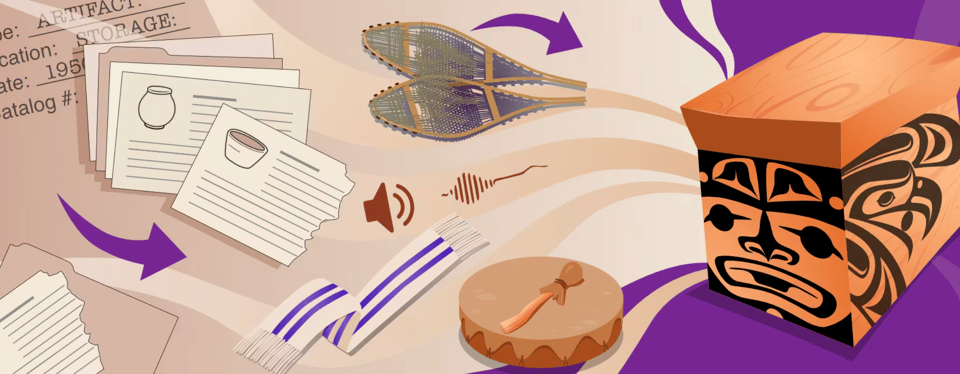
News & Insights: The Memory Keepers
The big picture: Indigenous communities are building digital archives on their own terms, and reclaiming centuries of stolen stories in the process.
Why it matters: For most of the twentieth century when an Indigenous community wanted to access records about its own people, it had to request permission from the institution who held the records, and asymmetry was built into the system. Western archives are generally built on the principle of open access. The more people who can read a document, the better the archive is working. But many Indigenous knowledge systems operate differently.
Key points:
Communities recognized the government and institutional digitization without Indigenous context and governance simply moved the same colonial power dynamics onto new infrastructure.
Platforms have emerged that let communities define "cultural protocols," fine-grained rules about who can see what, and under what conditions. The point of these archives was never to make knowledge available to everyone. It was to make knowledge safe and organized for the people it belonged to.
When data sovereignty becomes a design principle, theoretical concerns translate into technical decisions, and determine whether a community actually controls its own records or merely has a login to somebody else's system.
What we’re learning: Digital archives aren’t really building museums in the traditional sense. And they aren’t creating databases in the corporate sense. They’re about the longer-term function of self-determination. Read the full Insights article here.
Curated Articles:
Indigenous sovereignty and the limits of the Canadian Precision Health Initiative
Launched in 2024, the Canadian Precision Health Initiative will amass Canada’s largest human genomic dataset, including genomes of Indigenous peoples. Our analysis reveals how its structure and governance constrain Indigenous sovereignties within Canadian genomics and precision health efforts. In October 2024, Genome Canada, a leading funder of genomics research in Canada, launched a call for Letters of Intent (LOIs) for the first pillar of its Canadian Precision Health Initiative (CPHI). The CPHI is a $200 million national effort aimed at transforming health care by generating and mobilizing large-scale, diverse genomic data to enable equitable, personalized health interventions for Canadians, including Indigenous peoples. Structured in four program pillars: data generation, mobilization, governance (including the ethical, environmental, economic, legal, and social implications of genomics (GE3LS)), and alliance-building, the initiative aims to sequence over 100,000 genomes, prioritize Indigenous data sovereignty, and foster health research innovation.
How student researchers are changing the data game in support of Indigenous hockey
When Lucas Rotondo (BSM ’24) was invited to participate in a sport research project supporting Indigenous hockey players, he didn’t realize he was taking the first step on an unexpected journey. Then an undergraduate Sport Management student, Rotondo was eager to develop his technical skills. Beyond leading him to his current master’s program at Brock, however, the experience also proved to be an opportunity for personal growth. “Those opportunities allowed me to reconnect with a significant part of who I am, which was so impactful for me,” says Rotondo, a member of the Michipicoten First Nation. “And as I look back, those were important moments in my personal learning and healing as well.” The team collaborated with the Manitoba Aboriginal Sports and Research Council (MASRC) to develop ways of gathering, analyzing and presenting Indigenous hockey data to better understand Indigenous athlete experiences and how to support Indigenous hockey in Manitoba. This work was supported by Mitacs through the Mitacs Accelerate program.
New Indigenous data sovereignty toolkit from NWAC
The Native Women’s Association of Canada (NWAC) is a national Indigenous organization representing the political voices of Indigenous women in all their diversities in Canada. NWAC advocates and works with First Nations – on- and off-reserve, status and non-status, disenfranchised – Métis, and Inuit peoples across Canada. We are proud to share our new Indigenous Data Sovereignty toolkit. Developed through a CRGBA-informed approach, this resource provides an introduction to Indigenous data sovereignty, recognizing the rights of Indigenous peoples to govern, own, and control data about their communities, lands, and identities. We invite you to explore the toolkit and reflect on how these principles can shape your work.
Getting access to RCMP 'Native extremism' files took 4-year fight
Library and Archives Canada (LAC) told CBC Indigenous it would need nearly four years to consult on a request to see 50-year old secret records from an RCMP program that spied on so-called "Native extremism." "Consultations with [Canadian Security Intelligence Service] are necessary to ensure that LAC does not inadvertently disclose sensitive information that is exempted from disclosure, including information that could pose real dangers to national security," Crown lawyers wrote in a court brief in 2024. The fight began in 2022 when CBC Indigenous reporter Brett Forester used Access To Information (ATIP) to ask to see a file created by the RCMP Security Service, which monitored hundreds of Indigenous people during the 1970s, stored at the archives.
The number of renewable energy projects that are fully or partly Indigenous-owned is growing quickly in Canada, and our new research suggests that their benefits reach far beyond reducing greenhouse gas emissions. Nearly one-fifth of the country’s electricity-generating infrastructure involved First Nations, Métis and Inuit partners or beneficiaries as of 2022. Yet little is known about the impacts of these renewable-energy projects within the participating communities beyond the physical footprint of the construction. We aimed to fill this information policy gap in response to a request from two organizations that work extensively with First Nations. Together we conducted a study to paint a more complete picture of these broader impacts, interviewing knowledge-holders in 14 First Nations in British Columbia involved with 36 planned or operational Indigenous-led renewable energy projects. We found that these projects employ “placed-based” approaches, often with a high degree of community engagement early on, and revenues often allocated to support their own culture, governance, ecology, support services and economy.

Add a comment: